

Why Fashion Advice Doesn’t Work for Real People (The “Context” Error)
You read the magazines. You scroll through Instagram. You see the “Must-Have” list. You buy the trench coat. You buy the chunky loafers. And then you never wear them. Or worse, you wear them and feel like an impostor in a costume.
Why does this happen? Are you bad at dressing? No. The system is rigged. Everyday clothing and fashion trends live in two completely different worlds. Traditional fashion advice is designed for a “Fantasy Life”—dinners at 8 PM, taxis everywhere, and zero humidity. It is not designed for your life.
Imagine standing on a crowded bus in humid weather, wearing a stiff blazer someone on Instagram called “timeless.” Your shoulders feel trapped, sweat builds up, and suddenly you hate the outfit—not because it looks bad, but because it fights your reality.
At Wovqo, we believe style without utility is just friction. We analyze clothing the same way engineers analyze systems: inputs, constraints, and real-world use. Here is the engineering breakdown of why fashion advice doesn’t work for real people and the logical system to replace it.
TL;DR – The Reality Check
The Mannequin Fallacy: Clothes are designed to look good standing still. You live your life moving.
The Fantasy Self: You buy clothes for the person you want to be, not the person you are.
The Trend Churn: Trends are designed to expire. Stop chasing them.
The Fix: Ignore “Occasion” wear. Build a “Daily Uniform” based on comfort physics.
Stop trying to fit your life into the clothes. Make the clothes fit your life.
1. The “Fantasy Self” Error (Data Mismatch)
We all have a “Fantasy Self.”
-
Fantasy You goes to art galleries and drinks espresso on cobblestone streets.
-
Real You works in a temperature-controlled office and walks 4,000 steps on concrete.
The Mistake: Fashion advice for real life is rarely found in magazines. They sell to your Fantasy Self. They tell you to buy 4-inch heels or rigid raw denim. The Reality: These items gather dust because they have high “Friction.” The Fix: Audit your last 30 days. If 80% of your time is spent sitting, buy pants that stretch. If 90% of your time is walking, burn the heels. Buy for the data, not the dream.
2. The “Mannequin Fallacy” (Static vs. Dynamic)
Have you ever tried on a shirt, looked in the mirror, and thought “Perfect”? Then you drove to work, and the collar choked you, or the shirt untucked itself every time you reached for a coffee.
The Problem: Fashion advice judges an outfit by a photo. The Reality: You are a 3D object in motion. Clothes that look good in a static photo often fail the “Life Test.” Rigid fabrics bunch up. Low-rise pants slide down. The Fix: The “Sit Test.” Never buy pants without sitting down in the dressing room. If they cut into your stomach, they are a failure, no matter how “stylish” the magazine says they are.
Quick Reality Style Audit
Before you keep an item, run this diagnostic:
How many hours do I sit per day? (If >6, rigid waistbands are out).
How far do I walk daily? (If >1km, flat shoes are mandatory).
What temperature do I live in? (If humid, polyester is banned).
Do I reach for this item without thinking?
If a clothing item fails 2 or more, it doesn’t belong in your wardrobe.
3. The “Trend Churn” Algorithm
The fashion industry has one goal: Planned Obsolescence. If you feel “satisfied” with your wardrobe, they lose money. This is exactly why fashion trends don’t work for a sustainable closet. They invent arbitrary rules: “Skinny jeans are out. Wide leg is in.” Six months later: “Wide leg is sloppy. Cigarette cuts are back.”
The Mistake: You try to keep up. The Result: You have a closet full of cheap, ill-fitting clothes that you don’t actually like. The Fix: The Uniform. Find the one silhouette that makes you feel powerful. Is it a black T-shirt and slim chinos? Great. Buy 5 of them. Consistency is not boring; it is iconic. (Read our guide on [[How to Look Stylish With Simple Clothes]] to master the uniform).
4. The “Body Shape” Lie
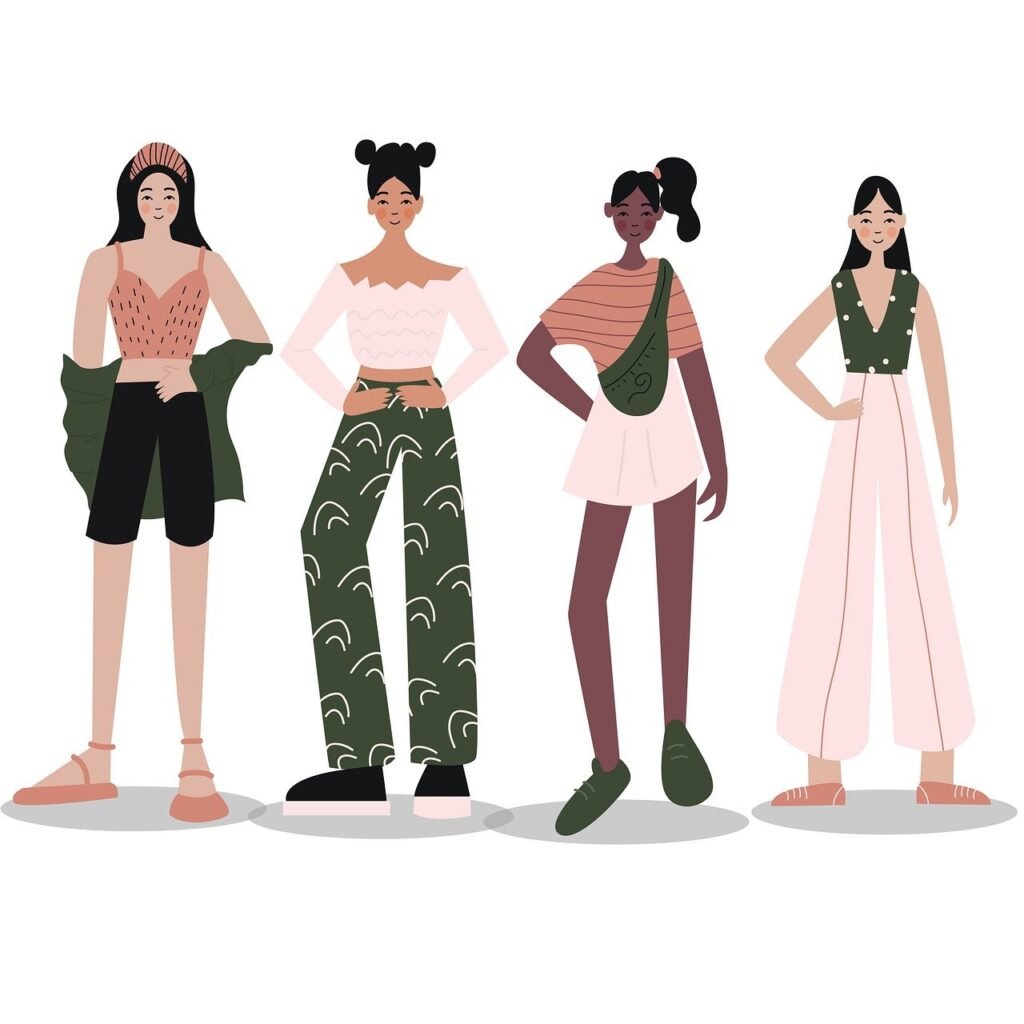
Standard advice puts you in a box: “Pear,” “Apple,” “Rectangle.” This is geometry, not style. It tells you to “hide” your flaws and “balance” your shape. This is nonsense. It creates anxiety. It makes getting dressed a geometry exam.
The Fix: Focus on Proportion, not Shape.
-
If the top is loose, keep the bottom slim.
-
If the pants are wide, keep the top fitted.
-
That’s it. That is the only rule you need to know.
5.  3 Signs You Are Following Bad Advice
Delete these habits from your system immediately:
-
“Saving it for good”: If you have a nice shirt, wear it on Tuesday. “Special occasions” rarely happen. Looking good today matters.
-
Ignoring Fabric: A polyester shirt will make you sweat and smell, no matter how trendy the cut is. Check the label. Cotton, Linen, Wool. (Studies on [[fabric breathability]] from textile science research show that synthetic materials significantly increase skin temperature and discomfort during wear).
-
Buying “On Sale”: If you wouldn’t buy it at full price, you don’t actually want it. You just want the dopamine hit of a “deal.”
Final Thoughts: Optimize for Tuesday Morning
Real style isn’t about how you look at a wedding once a year. It’s about how you look on a rainy Tuesday morning when you are late for work. If your clothes are comfortable, functional, and fit well, you will look better than the person chasing the trend.
Reject the friction. Embrace the logic. Dress for your reality — not the version of life marketing wants you to live.
Frequently Asked Questions
Is it okay to wear the same style every day?
Yes. This is called a “Signature Style.” The most successful people in the world (Steve Jobs, Barack Obama) reduce decision fatigue by wearing a uniform. It projects confidence and saves mental energy.
Why do clothes look different on me than the model?
Lighting, pinning, and editing. In photoshoots, clothes are often pinned at the back to simulate a perfect fit. Models are also lit to hide wrinkles. Do not compare your 3D reality to a 2D lie.
How do I stop buying clothes I never wear?
The “3-Outfit Rule.” Before you buy a new item, ask yourself: “Can I wear this with 3 things I already own?” If the answer is No, put it back. This stops you from buying “orphan” items that don’t fit your system.
