

Feel like you have “nothing to wear”? Here is how to build a personal style from scratch using data, the “Three Word Method,” and the power of a daily uniform.
How to Build a Personal Style from Scratch: The 3-Step “Uniform” Method
Building a personal style is the process of creating a system of aesthetic constraints that reduces decision fatigue while increasing confidence.
You scroll through Instagram. You see a chaotic mix of trends: Baggy Y2K jeans, Old Money sweaters, and Cyberpunk jackets. You buy a little bit of everything. The result? A closet full of costumes, but very few clothes that actually feel like you.
True style isn’t about owning the “right” pieces; it’s about owning the right pieces for you. It is an editing process, not a shopping process. And learning how to build a personal style from scratch means replacing impulse shopping with intention.
Quick Answer: To build a personal style from scratch, you must follow the “Audit-Edit-Uniform” loop. 1. Audit your current favorites to find patterns. 2. Define your style in three specific adjectives (e.g., “Minimal, Structured, Neutral”). 3. Create a Uniform based on a silhouette that flatters you, and buy variations of that same outfit.
Style-in-10-Minutes Summary
If your closet feels chaotic → Audit what you actually wear (The Hanger Test).
If shopping feels confusing → Define your 3 style words.
If mornings feel stressful → Build a repeatable uniform.
If you regret purchases → Enforce the “2 out of 3 words” rule.
At Wovqo, we believe style is a toolkit. Here is the blueprint on how to build a personal style from scratch without spending a fortune on trends.
Phase 1: The “Hanger Test” (Data Collection)
Stop looking at Pinterest. Look at your laundry basket. The clothes in your laundry basket are the truth. The clothes in the back of your closet are the fantasy.
Professional stylists often start by restricting options—not expanding them—because clarity comes from limits.
The Experiment:
-
Turn all your hangers backward.
-
Every time you wear something and wash it, hang it back facing forward.
-
After 30 days, look at the backward hangers. These are the items you hate. Get rid of them.
-
Look at the forward hangers. This is your real style.
-
Are they all soft fabrics? You value comfort (Kinesthetic).
-
Are they all black? You value efficiency (Minimalist).
-
Are they all tight? You value structure.
Phase 2: The “Three Word” Method (The Filter)
Now that you have your data, give it a name. Select three adjectives that describe how you want to look. (This concept, popularized by stylists like Allison Bornstein, acts as a shopping filter).
-
Example A: Relaxed, Earthy, Vintage. (Result: Linen pants, oversized knits, brown boots).
-
Example B: Sharp, Polished, Monochrome. (Result: Blazers, tailored trousers, pointed heels).
-
The Rule: Before buying anything, ask: “Does this item hit at least 2 of my 3 words?” If not, put it back.
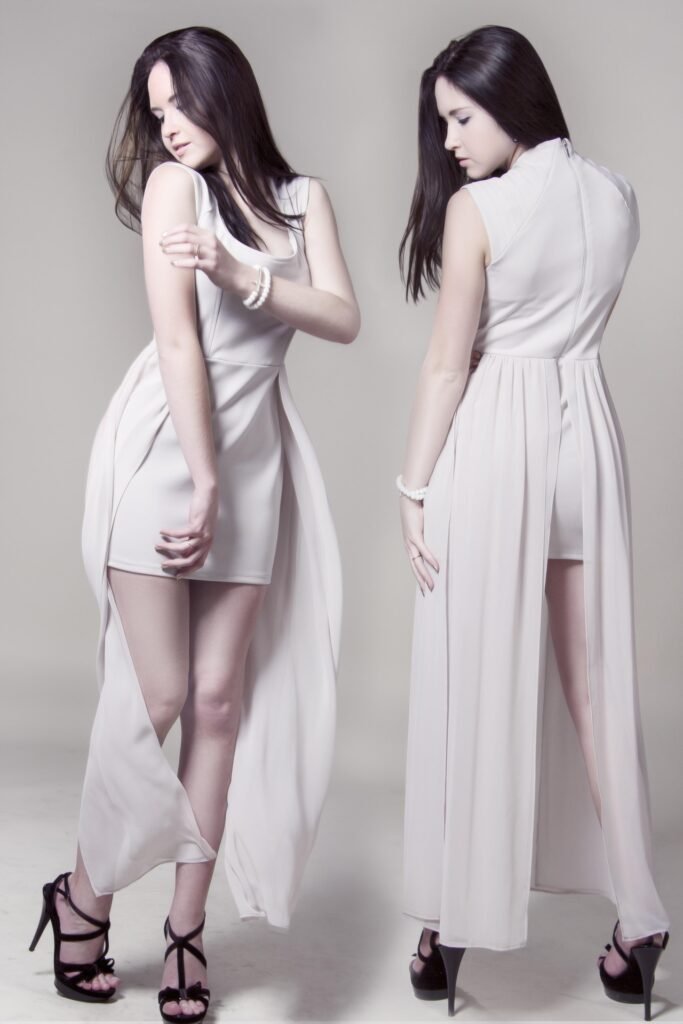
Phase 3: The Uniform (The Execution)
Style icons (Steve Jobs, Anna Wintour, Karl Lagerfeld) all have one thing in common: Repetition.
They found a silhouette that worked, and they automated it.
Find your formula:
-
Do you look best in high-waisted pants and a tucked-in tee? That is your uniform. Buy it in black, white, navy, and cream.
-
Do you prefer A-line dresses and boots? That is your uniform.
Why this works: You stop wasting energy reinventing the wheel every morning. You are not boring; you are consistent.
(Need a starting point? Check our guide on [[Outfit ideas using only 5 basic clothing items]]).
The Trap: Style vs. Fashion
Do not confuse the two. They are enemies.
| Feature | Fashion (Trend) | Style (Identity) |
| Driver | Marketing / FOMO | Self-Knowledge |
| Lifespan | 3–6 Months | 5–10 Years |
| Fit | “One size fits all” | Tailored to your body |
| Goal | To belong | To distinguish |
Real-Life Micro-Story: The “Sale Rack” Regret
“I used to buy anything that was 70% off. ‘It’s a $200 neon green blouse for $40! I have to buy it!’
It sat in my closet for two years with the tag on.
Why? Because my three words are Neutral, Matte, and Simple. Neon green violated all three.
Lesson: A bargain isn’t a bargain if it doesn’t fit your system. It’s just expensive clutter.”
Final Thoughts: It’s Okay to Be Boring
The biggest fear people have when learning how to build a personal style from scratch is being “boring.”
But look at the most stylish people you know. They aren’t wearing a different costume every day. They are wearing their look.
Confidence comes from knowing your outfit works before you even put it on.
(To ensure your new uniform actually fits your shape, read our guide on [[How to Measure Your Body Properly]]).
Frequently Asked Questions
How do I find my style if I like everything?
You don’t like everything; you appreciate everything. There is a difference between “That looks cool” (Appreciation) and “That looks like Me” (Style). Save the “cool” stuff to a Pinterest board for art; keep the “Me” stuff for your closet.
Does my body type matter for personal style?
Yes, it is the canvas. No matter how cool a jacket is, if it fights your natural proportions, you will feel uncomfortable. Understanding your measurements is the first step to knowing which silhouettes highlight your strengths.
Can I have two different styles?
Yes, but separate them by context. You can have a “Work Style” (Sharp, Neutral) and a “Weekend Style” (Boho, colorful). Treat them as two separate capsules so you don’t get confused when getting dressed.
