
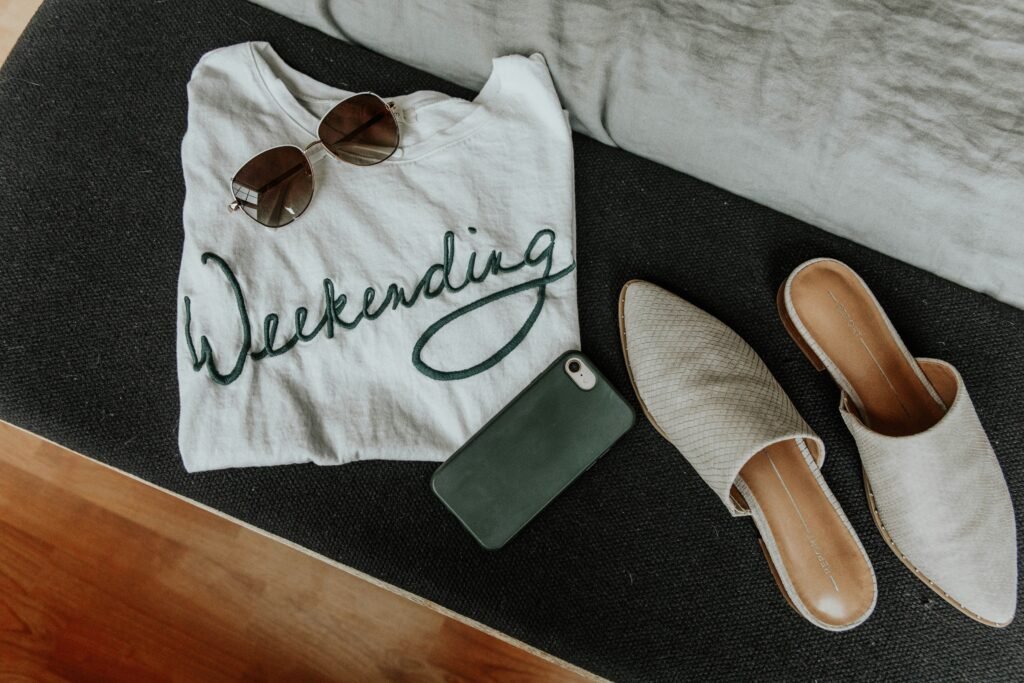
Staring at a full closet in panic? Stop. Use these 7 psychological fashion formulas—from the "Wrong Shoe Theory" to "Column Dressing"—to look chic instantly without spending a dime.
What to Wear When You Have “Nothing to Wear”
It is a feeling we all know.
You are standing in front of your closet. It is 8:15 AM. You have to leave in ten minutes. The closet is bursting with clothes—hangers jammed together, piles of denim, that dress you bought on sale three years ago and never wore.
You stare at the chaos. You sigh. And you say the universal lie:
“I have absolutely nothing to wear.”
It feels ridiculous. But here is the truth: It is not ridiculous. It is “Decision Fatigue.”
The average person makes 35,000 decisions a day. By the time you try to get dressed, your brain is tired. It can’t see “outfits”; it only sees “laundry.”
You don’t need a shopping spree. You don’t need a new wardrobe. You need a Strategy.
As a fashion editor, I don’t rely on luck to get dressed. I rely on Formulas. Here are the 7 fail-proof outfit recipes I use when I hate everything I own but still need to look expensive.
1. The “Sandwich Method” (Balance Your Look)
This is the secret weapon of every influencer on your Instagram feed. It works because the human eye loves symmetry.
The Rule: Your Shoes should match your Top.
The Top: A white t-shirt.
The Middle: Blue jeans (or a black skirt).
The Shoes: White sneakers.
Why it works: By “sandwiching” the outfit with the same color at the top and bottom, you look intentional and put-together instantly. Even if you are just wearing sweats, if your socks match your hat, it’s a “look.”
2. The “Wrong Shoe” Theory
This concept went viral for a reason—it instantly modernizes any boring outfit.
The Rule: Pick the outfit, then choose the shoe that “doesn’t make sense.”
Wearing a pretty, floral summer dress? Don’t wear sandals. Wear chunky Dad sneakers.
Wearing baggy, distressed boyfriend jeans? Don’t wear sneakers. Wear pointy-toe heels.
Wearing tailored office trousers? Wear flip-flops or retro trainers.
Why it works: Fashion is about tension. If an outfit is too perfect, it looks boring. The “wrong” shoe adds that cool, “I didn’t try too hard” energy.
3. Column Dressing (To Look Taller & Leaner)
If you feel bloated or just “blah,” this is your safety net.
The Rule: Wear one single color (or tone) underneath, and throw a contrasting layer on top.
Base: Black tank top + Black trousers.
Layer: A beige trench coat or an unbuttoned white shirt.
Why it works: The single column of color creates a vertical line that lengthens your body. It is sleek, slimming, and takes exactly three seconds to put together.
4. The “Third Piece” Rule
This is the main difference between “wearing clothes” and “having style.”
Most of us stop at two pieces: Pants + Top. That is technically clothes, but it is not an outfit.
The Rule: Always add a third element.
Basic: Jeans + T-Shirt. (Boring)
Styled: Jeans + T-Shirt + Blazer. (Chic)
Styled: Jeans + T-Shirt + Sweater draped over shoulders. (Preppy)
The third piece adds texture and structure. It shows you put in effort.
5. Elevated Loungewear (The “Rich Mom” Vibe)
Sometimes you just want to be comfortable. That is fine. But there is a way to do comfort without looking sloppy.
The Rule: Match your sets and add gold.
The Base: Grey sweatpants + Matching grey hoodie.
The Elevator: A camel wool coat + Gold hoop earrings + Slicked back bun.
Why it works: Matching sets read as “luxury” (think airport style). The gold jewelry tricks the brain into thinking the outfit is expensive, even if the sweats are 5 years old.
6. Texture Mixing (Monochrome Magic)
Want to wear all black? Go ahead. But avoid the “waiter look” (black cotton shirt + black cotton pants).
The Rule: Mix at least two different fabrics.
Example: Black Leather skirt + Black Knit sweater.
Example: Black Denim jeans + Black Silk camisole.
Why it works: When you remove color, texture becomes the star. The light hits leather differently than it hits wool, creating depth and interest.
7. The “Front Tuck” (The 5-Second Fix)
If you look in the mirror and feel frumpy, do not change your clothes. Change your silhouette.
The Rule: Tuck just the very front of your shirt into your waistband.
Why it works: Oversized clothes can swallow you up. By revealing your waistline (even just an inch of it), you restore your proportions. You define your legs, making them look longer, while still keeping the comfort of an oversized top.
Final Thoughts: Shop Your Own Closet
The next time panic sets in, don’t open a shopping app.
Take a breath. Pick a Formula. “Today I am doing the Sandwich.” “Today I am doing the Third Piece.”
Suddenly, that old blazer isn’t boring—it’s your Third Piece. Those old sneakers aren’t dirty—they are your “Wrong Shoe.”
You have plenty to wear. You just needed a new way to see it.
Frequently Asked Questions
Q: How do I find my personal style? A: Start with the “Three Word Method.” Pick three words that describe how you want to look (e.g., “Minimal, Edgy, Comfortable”). Before you get dressed, ask: “Does this outfit match my three words?” If not, adjust it.
Q: What are the absolute wardrobe essentials? A: To use these formulas, you need a “Capsule Wardrobe” base: A white tee, straight-leg blue jeans, black trousers, a blazer, a white sneaker, and a black boot.
Q: How do I look expensive on a budget? A: Focus on fabric and fit. Avoid thin, shiny polyester. Stick to natural fibers like cotton, linen, and wool. And most importantly—use a steamer! Wrinkled clothes always look cheap, no matter the brand.
About the Author The Fashion Team at [Your Website Name] believes style is a skill, not a budget. We help you decode the psychology of dressing so you can love the clothes you already own.
Have Any Question? Feel free to ask